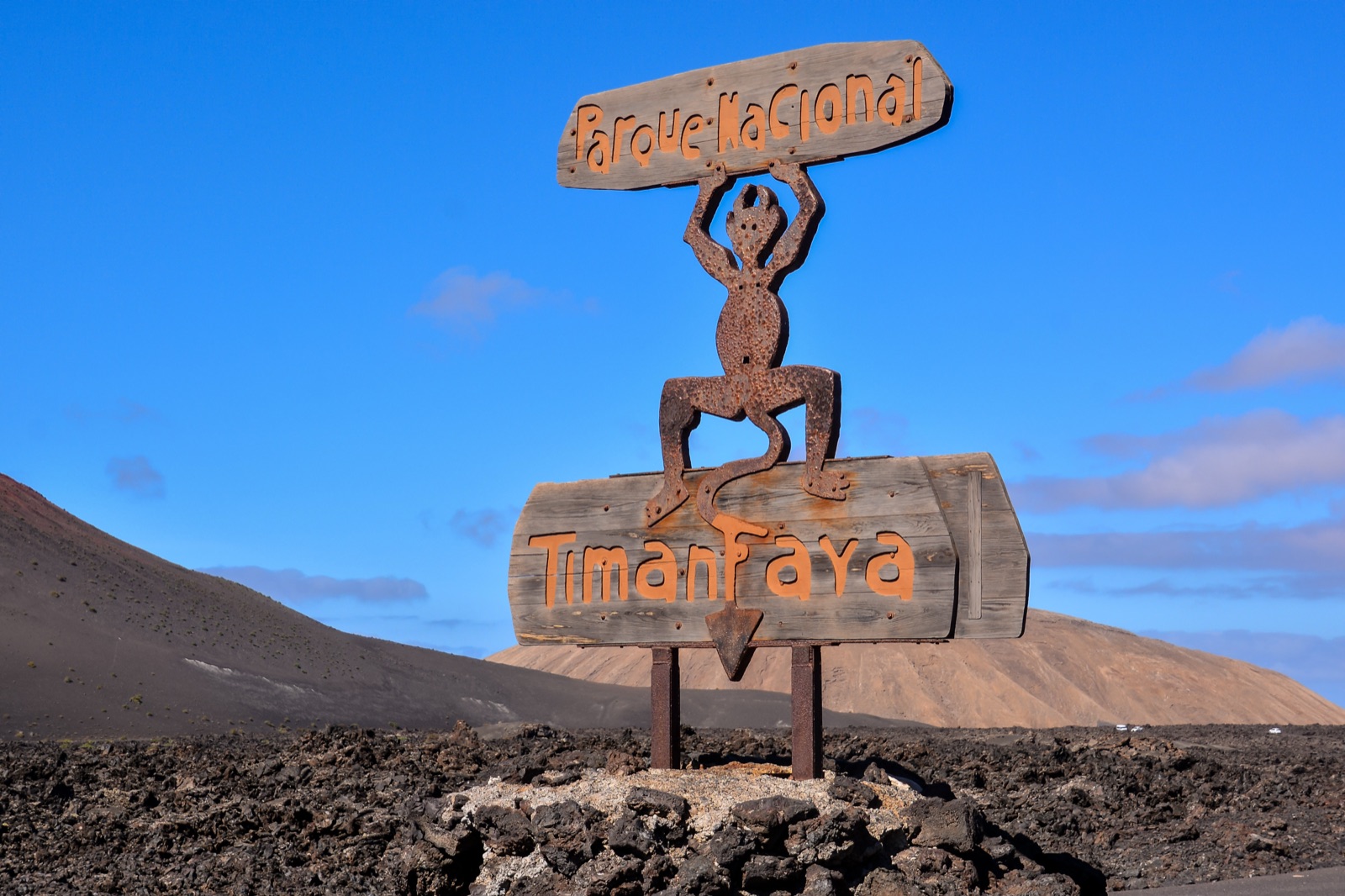
La Geria: Lanzarote's Volcanic Wine Country Next to Timanfaya
La Geria is the vineyard landscape that grew out of the Timanfaya eruption, and it lies just east of the national park, along the LZ-30 between Uga and Mozaga. Here vines grow one by one in hollows dug through the black volcanic ash, each sheltered by a half-moon of stone, in a protected landscape of 5,255.4 hectares. You can drive through it, stop at wineries to taste the local Malvasía Volcánica, and combine it easily with a morning at the Montañas del Fuego. From Puerto del Carmen it is about 10 minutes by car; from Arrecife, about 20 minutes.
This guide explains how the landscape works, where to taste, what the wineries charge, when to go and how to fit La Geria into a Timanfaya day.
La Geria at a glance
- What it is: a protected landscape of vines planted in volcanic ash. It was declared a natural park in 1987 and reclassified as a protected landscape in 1994.
- Size: 5,255.4 hectares, across the municipalities of Yaiza, Tías, San Bartolomé, Tinajo and Teguise.
- Where: just east of Timanfaya National Park, crossed by the LZ-30, the wine route from Uga to Mozaga.
- The grape: Malvasía, the most abundant variety, with native Malvasía Volcánica and Listán Negro among the island’s own varieties.
- Harvest: August and September.
- Also: a special protection area for birds (ZEPA), and a landscape that the Canary Islands tourism board says helped justify Lanzarote’s declaration as a UNESCO Biosphere Reserve.
How an eruption made a vineyard
Before 1730 the centre of Lanzarote was farmland. The eruptions of 1730–1736 buried a large part of it under lava, scoria and ash. The Lanzarote geopark describes La Geria as the largest field of wind-scattered pyroclasts in the Canary Islands, formed by the Timanfaya eruption: a blanket of small black stones, lapilli, which the islanders call picón or rofe.
The islanders did not wait for the eruption to finish. According to El Grifo’s history of the winery, from 1740 people began removing the sand to reach the soil and plant vines and fruit trees, and the vine proved the crop best suited to the new island. The same history names the parish priest of Yaiza, Andrés Lorenzo Curbelo, whose diary is the best-known account of the eruption, as the biggest winegrower on the island. Within a few decades the ash fields had become wine country. In the early years much of the must was sent to Arrecife to be distilled into brandy and shipped off the island; only later did the island’s wines become prized in their own right. The vineyards you see today are the result of more than two centuries of that patient work, carried out by hand, hollow by hollow.
How the vines grow
The method is the reason La Geria looks like nowhere else:
- Dig through the ash. Growers excavate the surface layer of picón, about two and a half metres deep, until they reach the buried soil, and plant the vine there.
- A hollow for each vine. The holes are shaped like small cones, about 3 m across. A hectare can hold up to 350 of them, depending on their depth.
- A wall against the wind. Each hollow is protected by a small semicircular wall of volcanic stone. The walls shield the vine from the trade winds and the intense sun.
- No irrigation. The porous ash works like a sponge: it absorbs moisture from the night dew and holds it in the subsoil, so the roots stay hydrated in an arid climate without irrigation. Lapilli also slows evaporation and prevents erosion.
The result is a field of thousands of dark craters, each with a green vine at the bottom. Fig trees are grown the same way, but the vine is the star.
The grapes and the wines
Lanzarote’s wines are made under the Vinos de Lanzarote designation of origin, whose regulatory council publishes a map of the island’s wineries. The wineries describe the wines as mineral and fresh, with a volcanic character.
- Malvasía Volcánica: the island’s signature white grape, made dry, semi-sweet and sweet.
- Listán Negro: the main red grape.
- Moscatel: for sweet wines.
You will also see traditional styles at some wineries, and sparkling Malvasía at others. Most wineries along the LZ-30 sell bottles to take away.
The old wineries are also experimenting. El Grifo, for example, says it recovers carbon dioxide, produces much of its energy with solar panels and practises regenerative viticulture, while still making two historic styles from recipes in its library. It has also bottled a wine from a winter harvest, which it describes as a first in Europe. Tasting a traditional Malvasía alongside one of these newer wines is a good way to understand how varied such a small wine region can be.
Driving the LZ-30 wine route
The LZ-30 runs through the heart of La Geria between Uga in the south and Mozaga in the centre of the island. Ways in:
- From Yaiza or Playa Blanca: take the LZ-30 north from Uga.
- From Puerto del Carmen: about 10 minutes, on the LZ-504 to the LZ-30.
- From Arrecife: about 20 minutes, on the LZ-2 to San Bartolomé and then the LZ-30.
- From Timanfaya: drive south on the LZ-67 to Yaiza and Uga, then turn onto the LZ-30.
Pull in only at winery car parks and recognised viewpoints, never on the verge.
Wineries you can visit
Lanzarote’s tourism board notes that around La Geria there are several wineries where you can taste local wine. Its directory includes El Grifo, Bodega La Geria, Rubicón, Stratvs, Vega de Yuco, Los Bermejo, La Florida, Martinón and Vulcano, among others. Two of the most visited are described below.
El Grifo
- History: El Grifo’s indoor wine press dates from 1775, according to its foundation inscription, which makes it one of the ten oldest wineries in Spain. The winery keeps wines from 1881 and began bottling in 1935, a first in the Canary Islands.
- The Manrique link: in 1986 work began on turning the old winery into a museum, with advice from César Manrique, a family friend, who also designed labels and the winery’s emblem.
- Where: the El Grifo wine museum is at LZ-30, km 11, San Bartolomé, at the northern end of La Geria.
What it offers (prices from the winery’s website, 2026):
| Experience | What it includes | Time | Price |
|---|---|---|---|
| Audio-guided visit | Museum and old winery at your own pace, tasting of 2 wines | 45 minutes | €15 (free for children up to 17) |
| Tasting of selected wines | Guided tasting of 5 wines, no winery tour, adults only | 35 minutes | €30 |
| Wine Lovers | Guided tour limited to 12, vineyard walk, museum, tasting of 6 wines, adults only | 120 minutes | €50 |
| Wine Lovers & Gastronomy | The tour plus a paired lunch, limited to 10 | 120 + 90 minutes | €95 |
The audio-guided visit is the easy choice with children or on a tight schedule; the guided tours need booking.
Bodega La Geria
- History: founded in 1896 by the Rijo family and bought by the Melián family in 1993.
- Where: in the heart of the vineyards, on the Ctra de La Geria at km 19.
- Why stop: from the winery you can see the volcanoes of Timanfaya National Park across the vines. It has a tavern, La Cepa, for a glass and something to eat.
- Guided visits: sold online and released 12 days before the chosen date. The tour is not accessible for people who have difficulty walking, and pushchairs cannot be used (the winery can store them). Groups of more than 8 must contact the winery by email.
Tasting tips
- Choose a driver. The LZ-30 is a winding country road, and Spain’s drink-driving rules are strict. A tour with transport solves the problem.
- Book the guided tours. The guided visits at both wineries above are booked ahead, and Bodega La Geria releases its dates only 12 days in advance.
- Pair it with the park. A morning slot at the Montañas del Fuego leaves the afternoon free for tasting.
- Buy at the cellar door. Both wineries above sell their wines on site.
When to visit La Geria
Every season has something:
- August and September: the grape harvest, the liveliest time in the vineyards.
- Autumn: the wineries are busy making wine. In 2026, Semana Malvasía, the island’s wine week, ran from 3 to 8 November; its 12th edition sold out.
- Spring: the vines sprout and the landscape is at its greenest against the black ash, good for exploring on foot or by bike.
- Winter: quieter, with calm golden light.
For the weather month by month, see our best time to visit Timanfaya guide and the weather page.
Combining La Geria with Timanfaya
La Geria and the Montañas del Fuego sit side by side, so a combined half-day is easy:
- Morning: a timed slot at the Montañas del Fuego, with the geothermal demonstrations and the Volcano Route.
- Midday: drive south to Yaiza and Uga and onto the LZ-30.
- Afternoon: one or two wineries, ending at Mozaga or San Bartolomé.
If you would rather not drive, the Timanfaya and La Geria tour combines the Volcano Route and geothermal demonstrations with the La Geria vineyards and the Green Lagoon at El Golfo, in about 5.5 hours. The full-day island highlights tour also includes La Geria wine.
Our guide to getting to Timanfaya covers the roads and parking at the park, and the El Golfo article adds the west coast.
A half-day La Geria itinerary
If you have a car and a free afternoon, this simple route takes in the best of the wine country from south to north:
- Uga. Start at the southern end of the LZ-30, a short drive from Yaiza. The first hollows and stone walls appear almost at once.
- The heart of La Geria. Continue north through the most photographed stretch of vineyards, with cones rising on both sides. Stop at a winery car park for photographs rather than on the road.
- Bodega La Geria. A guided visit or a glass at its tavern, with the volcanoes of Timanfaya on the horizon.
- El Grifo. Further north at km 11, for the wine museum and the 1775 press. The audio-guided visit fits into 45 minutes.
- Mozaga. Finish at the Casa Museo del Campesino, which is free.
Reverse the order if you are coming from Arrecife or the north of the island. Either way, a designated driver, or a tour, makes the day far more relaxed.
La Geria and César Manrique
The artist who shaped so much of modern Lanzarote also left his mark on its wine country. At the Montañas del Fuego, the counters inside Manrique’s El Diablo restaurant are designed to recall the socos of La Geria, the semicircular walls that protect the vines from the wind. At El Grifo, Manrique advised on the creation of the wine museum and designed the label of the winery’s semi-sweet Malvasía. And at Mozaga his Casa Museo del Campesino celebrates the farmers who made the ash fields productive. Our article on César Manrique follows his work around the island.
La Geria on foot or by bike
El Grifo describes spring as the ideal season for exploring La Geria on foot or by bicycle, in mild, bright weather. There is no single marked trail through the vineyards, and the hollows are private farmland, so keep to tracks and roads and never cut across a vineyard. The LZ-30 itself carries cars and coaches, so cyclists should take care and ride early in the day. Bring water and sun protection: like the national park, the ash fields have no shade.
More along the way
The Mancha Blanca visitor centre
The national park’s visitor centre has an exhibition space devoted to La Geria’s vine growing, alongside its displays on the eruption. It opens daily from 9:00 to 16:00, on the LZ-67 at km 9.6.
The Casa Museo del Campesino
At Mozaga, at the northern end of the wine route, César Manrique’s Casa Museo del Campesino pays tribute to Lanzarote’s farming knowledge. It opens 10:00–18:00 every day, a visit takes about 50 minutes, and it is free. Distal lava flows from the Timanfaya eruption are preserved inside the neighbouring Monumento al Campesino.
The Cueva de los Naturalistas
Beneath the vineyards lies the Cueva de los Naturalistas, a lava tube 1,600 metres long, protected as a natural monument. The tourism board says it can be entered with care and a good torch, as small lava needles hang from its roof; it is a protected site, so treat it with respect.
Respecting the landscape
La Geria is a working farm landscape as well as a protected one:
- Keep out of the hollows. Each one is someone’s vineyard, and the walls are dry stone that is easily damaged.
- Take nothing. Do not take stones or anything else from the natural environment, and do not build stone “towers”.
- Stay on permitted paths, and follow the signs on any trail.
- Respect the birds. La Geria is a special protection area for birds.
The landscape only survives because the vine growers keep working it, so buying a bottle at the cellar door is a small way of supporting it.
Frequently asked questions
What does “geria” mean?
A geria is the hollow itself: a cone-shaped pit dug into the layers of volcanic gravel, with a vine planted in the middle and a half-moon of stones on its rim against the wind. The whole landscape takes its name from them.
Where is La Geria?
Just east of Timanfaya National Park, in the centre of Lanzarote, along the LZ-30 between Uga and Mozaga.
How do the vines survive without rain?
The volcanic ash absorbs the night dew and keeps the moisture in the subsoil, so the vines are grown without irrigation. Stone walls protect each plant from the wind.
Which winery is the oldest?
El Grifo, whose wine press dates from 1775; it is one of the ten oldest wineries in Spain.
How much is a tasting?
At El Grifo, an audio-guided visit with 2 wines costs €15 and a guided tasting of 5 wines €30 (2026 prices).
Can I visit with children?
Yes. El Grifo’s audio-guided visit is free for children up to 17. Bodega La Geria’s guided tour does not allow pushchairs.
Do I need to book the wineries?
For El Grifo’s guided tours and Bodega La Geria’s guided visits, yes; the latter go on sale 12 days before the date. El Grifo’s audio-guided visit is also sold online, and booking ahead avoids disappointment in busy months.
Is there a tour that combines La Geria and Timanfaya?
Yes. The Timanfaya and La Geria tour includes the Volcano Route, the vineyards and El Golfo’s Green Lagoon in about 5.5 hours.