Culture & film
César Manrique on Lanzarote: His Works, Homes and How to Visit
César Manrique (1919–1992) was the Lanzarote-born painter, sculptor and designer who shaped how the island presents itself to visitors. Working with the island council, the Cabildo, he turned volcanic places into places to visit: a lava tube with a lake and a concert hall at Jameos del Agua, a lookout hidden in the Famara cliff at the Mirador del Río, a cactus garden in an old quarry, and, at Timanfaya, the El Diablo restaurant and the Volcano Route. Two of his homes are open too: the house built into lava bubbles at Taro de Tahíche, now his foundation, and his last house in Haría.
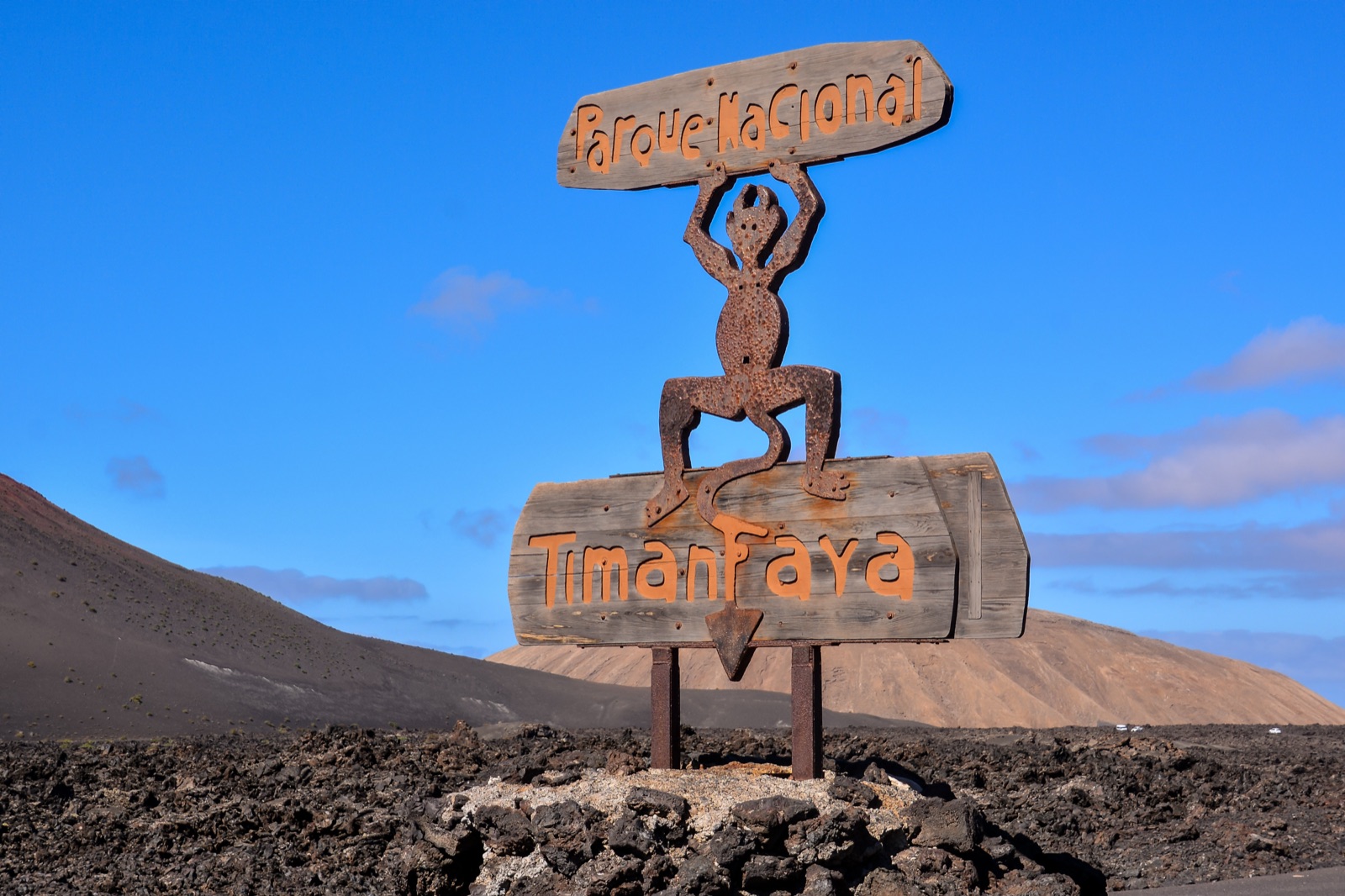
If you have been to Timanfaya, you have already seen his work. The devil on the national park’s signs is his emblem, and the round restaurant at Islote de Hilario is his building. This article covers who he was, what he made, and what each place costs and how long it takes, as the operators listed them in September 2026. Prices and hours change, so check before you go.
Manrique’s places at a glance
| Place | What it is | Hours | Adult ticket |
|---|---|---|---|
| El Diablo, Timanfaya | Restaurant and Volcano Route, 1970 | Park visits 09:00–15:45 | €30 park ticket |
| Jameos del Agua | Lava tube with lake and auditorium, opened 1968 | 10:00–18:00, last access 17:15 | From €17 |
| Cueva de los Verdes | Lava tube adapted by Jesús Soto, opened 1964 | 09:30–16:45 | €17, online, timed |
| Mirador del Río | Clifftop lookout, 1971–1973 | 10:00–17:00, last entry 16:40 | €9 |
| Jardín de Cactus | Garden in a former quarry | 10:00–17:00, last entry 16:30 | €9 |
| Fundación César Manrique, Tahíche | His home from 1968 to 1988 | 10:00–17:30 | €10, or €17 joint |
| Casa-Museo, Haría | His last home | 10:00–17:30 | €10, or €17 joint |
Hours and prices are those shown on the CACT and foundation sites in September 2026. CACT is the network of Centres of Art, Culture and Tourism run by the Cabildo, and its centres open every day of the year.
Who César Manrique was
Manrique was born on 24 April 1919 in Arrecife, and spent his childhood between the Charco de San Ginés and La Caleta de Famara. He trained in Madrid at the San Fernando fine arts academy and graduated as a teacher of art and painting in 1945, then exhibited his painting regularly in Spain and abroad.
In 1964 he moved to New York. According to the Cabildo’s CACT site, he decided in 1966 to return to Lanzarote for good. The foundation’s own pages speak of his return from New York in 1968, the year he began living at Taro de Tahíche, so the two sources differ on the date. Either way, he came home just as the island was starting to build a tourist industry.
With the Cabildo, then presided over by José Ramírez, he began a series of projects to show off the island’s landscape. He called the idea behind them Arte-Naturaleza, art-nature. He did not work alone: his collaborators included Antonio Álvarez, Luis Morales, Jesús Soto and skilled craftsmen, and the centres they created became the CACT network.
Manrique died on 25 September 1992, in a road accident as he drove out of the foundation that bears his name. At 73 he was still fully active.
Manrique at Timanfaya: El Diablo and the Volcano Route
In 1970, as part of the Cabildo’s plan to protect and present the island’s most striking places, Manrique and his usual team, with Eduardo Cáceres, Jesús Soto and Luis Morales among others, directed the creation of the El Diablo restaurant and the Ruta de los Volcanes. Until then there had been only a small viewpoint on the site. The foundation notes that the Cabildo’s early action added weight to Timanfaya’s declaration as a national park in 1974.
Three pieces of that work shape every visit today.
The Volcano Route. The narrow road through the heart of the park was designed for the least physical and visual impact, and the most significant areas can be seen only through the Cabildo’s guide and bus service. That is why you leave your car at Islote de Hilario and board a bus.
The emblem. Manrique designed the park’s emblem, a schematic devil in dark tones with an ironic air. It is the figure on the park’s entrance signs, and it has become a symbol of the island.
The restaurant. El Diablo is a circular, single-storey building whose main front is a wide glass wall looking over the lava fields. Inside, look for the “Jardín muerto”, a small glassed-in space with a dry trunk and a dromedary’s skeleton, and, in the bar, frying pans used as lamps. Beside the restaurant, a walled enclosure holds an oven where the natural heat of the ground cooks the food: the foundation says the temperature exceeds 600 degrees only 15 metres down.
You see all of this as part of the Montañas del Fuego visit, which needs a timed ticket, €30 for adults. Our guide to Timanfaya tickets and the Volcano Route explains how the visit works, and our article on Lanzarote’s volcanoes explains the heat.
Jameos del Agua: the first centre
Jameos del Agua, in the north of the island, is a section of the La Corona lava tube, where parts of the roof collapsed to leave openings called jameos. In 1968 it opened as the first Centre of Art, Culture and Tourism created by Manrique, and the work was completed in 1977. The CACT site stresses that it is also the work of Jesús Soto and many Lanzarote craftsmen, technicians and workers.
What you see:
- The lake. Seawater seeps through the tube to form a lake whose level follows the tides. The white dots on its bed are blind crabs, Munidopsis polymorpha, an endemic species adapted to darkness. Do not throw coins or anything else into the water.
- The Jameo Grande. Beyond the cave, an open garden with palms and a white pool. Swimming in, or entering, the lake and the pool is not allowed.
- The auditorium. A concert hall built into the volcanic cavity, with the rock for walls and roof.
- The details. Manrique designed the furniture too; some pieces use buoys and fishing pots turned into lamps. The restaurant occupies a cavity of the tube in the Jameo Chico, where the visit begins.
- The Casa de los Volcanes. A museum about the lava tube and the island’s geology. Its visit takes about 60 minutes and includes a room devoted to César Manrique.
Practical details (September 2026): open 10:00–18:00 every day, with last access at 17:15. Tickets start from €17, and children aged 0 to 6 go free. The general visit needs no booked day or time. It takes about 60 minutes, plus another 60 minutes if you add the Casa de los Volcanes. Prams are not allowed, so bring a baby carrier. Every Friday, Noches de Jameos combines a night visit, dinner and a concert by the lake.
Cueva de los Verdes: Jesús Soto’s cave next door
Cueva de los Verdes is on the same Arrieta–Órzola road, in the same lava tube, which runs for more than seven kilometres, and it is part of the same CACT network. It is not a Manrique project, though. In the 1960s the Cabildo commissioned Jesús Soto to prepare it, and it opened to the public in 1964. Soto’s lighting picks out the colours and textures of the rock.
The cave was in use long before it was lit for visitors. In the sixteenth and seventeenth centuries, islanders hid in its galleries from pirate raids from North Africa, and its name is said to come from the surname of a family who used it.
Practical details (September 2026): a guided visit in Spanish and English, about a kilometre on foot and about 50 minutes, at €17, with visits between 09:30 and 16:45. Tickets are sold only online, for a set date and time, and you should arrive 15 minutes before your slot. The route is not adapted for reduced mobility and is not recommended for people with claustrophobia; visitors taller than 1.80 metres should watch the low ceilings.
Mirador del Río
The Mirador del Río stands at the top of the Risco de Famara, above El Río, the strait between Lanzarote and La Graciosa. Work began in 1971 and it opened in 1973, with Eduardo Cáceres and Jesús Soto collaborating. Manrique dug the building into the ground and covered it with volcanic stone, so that it is barely visible from outside. Inside, two vaulted windows frame El Río and the Chinijo archipelago, with La Graciosa opposite the cliff.
The details repay a slow visit. At the entrance, a sculpture of a bird and a fish stands for the air and the sea; in the entrance passage, ceramics by Juan Brito draw on the island’s aboriginal pottery; and a spiral staircase leads up to a terrace crowned by a skylight.
Practical details (September 2026): open 10:00–17:00, with last entry at 16:40. A visit takes about 45 minutes and costs €9; under-7s go free. Between October and May, bring warm clothing: the cliff-top is windy. The café serves barraquito, an island drink of coffee, milk, liqueur, cinnamon and lemon. It is on the Carretera de Ye, in the municipality of Haría.
Jardín de Cactus
Before it was a garden, this site in Guatiza was a rofera, a quarry of volcanic material that was also used as a dump. Manrique kept the shape of the excavation and filled its terraces with cacti. The garden now holds close to 500 species from around the world. The first plant, a Euphorbia candelabrum that grows to between 6 and 7 metres, was planted by Manrique and his team on 18 January 1989, and the project was developed over two decades. In 2017 the garden received the International Carlo Scarpa Prize.
Around it lie the prickly-pear plantations historically tied to cochineal farming, and at the top of the garden stands a maize mill, one of the last still standing on Lanzarote.
Practical details (September 2026): open 10:00–17:00, with last entry at 16:30. A visit takes about 60 minutes and costs €9.
Manrique’s two homes
Fundación César Manrique, Taro de Tahíche
Taro de Tahíche was Manrique’s home for 20 years, from 1968 to 1988, the longest he lived anywhere. It stands in a lava flow from the eruptions of 1730 to 1736, the same eruptions that made Timanfaya. The 3,000 square metre building sits on a 30,000 square metre plot. The upper floor draws on Lanzarote’s traditional architecture; the lower floor is built around five natural volcanic bubbles joined by tunnels dug through the lava. The house is now the seat of the foundation, and his former studio is an exhibition room. The pool, the small ballroom, the oven and the barbecue are open to visitors, and the garden plays black lava and volcanic ash against fruit trees and other plants.
Practical details (September 2026): open every day, including holidays, from 10:00 to 17:30, with the ticket counter closing at 17:00. It is closed on 1 January. A standard ticket costs €10, or €17 as a joint ticket with the Haría house; children aged 7 to 12 pay €3, or €4 for the joint ticket.
Casa-Museo César Manrique, Haría
In early 1986 Manrique began building a new home in a palm grove in the village of Haría, adapting a run-down farmhouse. He lived there until his death in 1992, and in 2013 the house opened to the public as a home and museum. It is the more personal of the two. Two courtyards lead into a world of his belongings, utensils and objects he found and put to decorative use, and his studio, in a separate building, has been kept just as he left it when he died.
Practical details (September 2026): open every day, including holidays, from 10:00 to 17:30. A standard ticket costs €10, or €17 as a joint ticket with Tahíche.
Two more CACT centres
- Casa Museo del Campesino, Manrique’s tribute to the farming knowledge of Lanzarote, built around the island’s rural architecture.
- Castillo de San José, an eighteenth-century fortress that has housed the MIAC, an international museum of contemporary art, since 1976.
Manrique’s influence on the island
You will often read that Manrique wrote Lanzarote’s building rules. His foundation’s account is different, and more interesting. He helped start the tourist industry with the Cabildo president José Ramírez Cerdá, and then became an outspoken critic of the way it grew. In 1965 he said he was a little worried about the avalanche of tourists to come. When hotel building sped up, he joined protest marches against new tourist complexes, and in 1986 he wrote a piece titled “Lanzarote se está muriendo”, Lanzarote is dying. In 1988 he joined a protest against a tourist complex on the beach at Los Pocillos.
The foundation describes a social artist who confronted authorities and developers in public. The places above show the other side of that stance: examples of how to build for visitors without spoiling what they came to see.
Planning a Manrique day
The north of the island holds most of his work, and it fits into one day:
- Start early at Cueva de los Verdes with a timed ticket, then drive the short way along the same road to Jameos del Agua.
- Continue to the Mirador del Río, on the Carretera de Ye, for the view over La Graciosa.
- Stop in Haría for the Casa-Museo.
- Finish at the Jardín de Cactus in Guatiza, or, on another day, visit the foundation at Tahíche.
Book the timed tickets first. At Montañas del Fuego and Cueva de los Verdes, tickets can only be bought online for a set date and time; at the other centres you can buy at the ticket office, though CACT advises buying in advance.
Timanfaya, in the south, needs a separate half-day. If you would rather not drive, the tour Timanfaya, Jameos del Agua and Cueva de los Verdes covers the Volcano Route and both caves in about 9 hours, and the full-day island highlights tour adds Haría’s palm valley and La Geria wine in about 9 hours. The tours page lists them.
Frequently asked questions
Who was César Manrique?
A painter, sculptor and designer born in Arrecife on 24 April 1919. From the mid-sixties he worked with the Cabildo to turn Lanzarote’s volcanic landscape into places to visit, including Jameos del Agua, the Mirador del Río and the El Diablo restaurant at Timanfaya. He died on 25 September 1992.
What did César Manrique design at Timanfaya?
In 1970 he and his team created the El Diablo restaurant at Islote de Hilario and the Ruta de los Volcanes, the bus route through the park. He also designed the park’s devil emblem.
Is the Cueva de los Verdes by César Manrique?
No. The Cabildo commissioned Jesús Soto, one of Manrique’s collaborators, to prepare it in the 1960s, and it opened in 1964. It is part of the same CACT network and the same lava tube as Manrique’s Jameos del Agua.
Can you visit César Manrique’s house?
Yes, two of them. The Fundación César Manrique at Taro de Tahíche, his home from 1968 to 1988, and the Casa-Museo in Haría, where he lived until 1992. Each costs €10, or €17 for a joint ticket to both, as listed in September 2026.
How much does Jameos del Agua cost?
Tickets start from €17, with children aged 0 to 6 free, according to the CACT site in September 2026. It is open 10:00–18:00 every day, with last access at 17:15.
Can I see Manrique’s main works in one day?
The northern works can be combined: Cueva de los Verdes, Jameos del Agua, the Mirador del Río, Haría and the Jardín de Cactus. Timanfaya is at the other end of the island and is better on a different day.